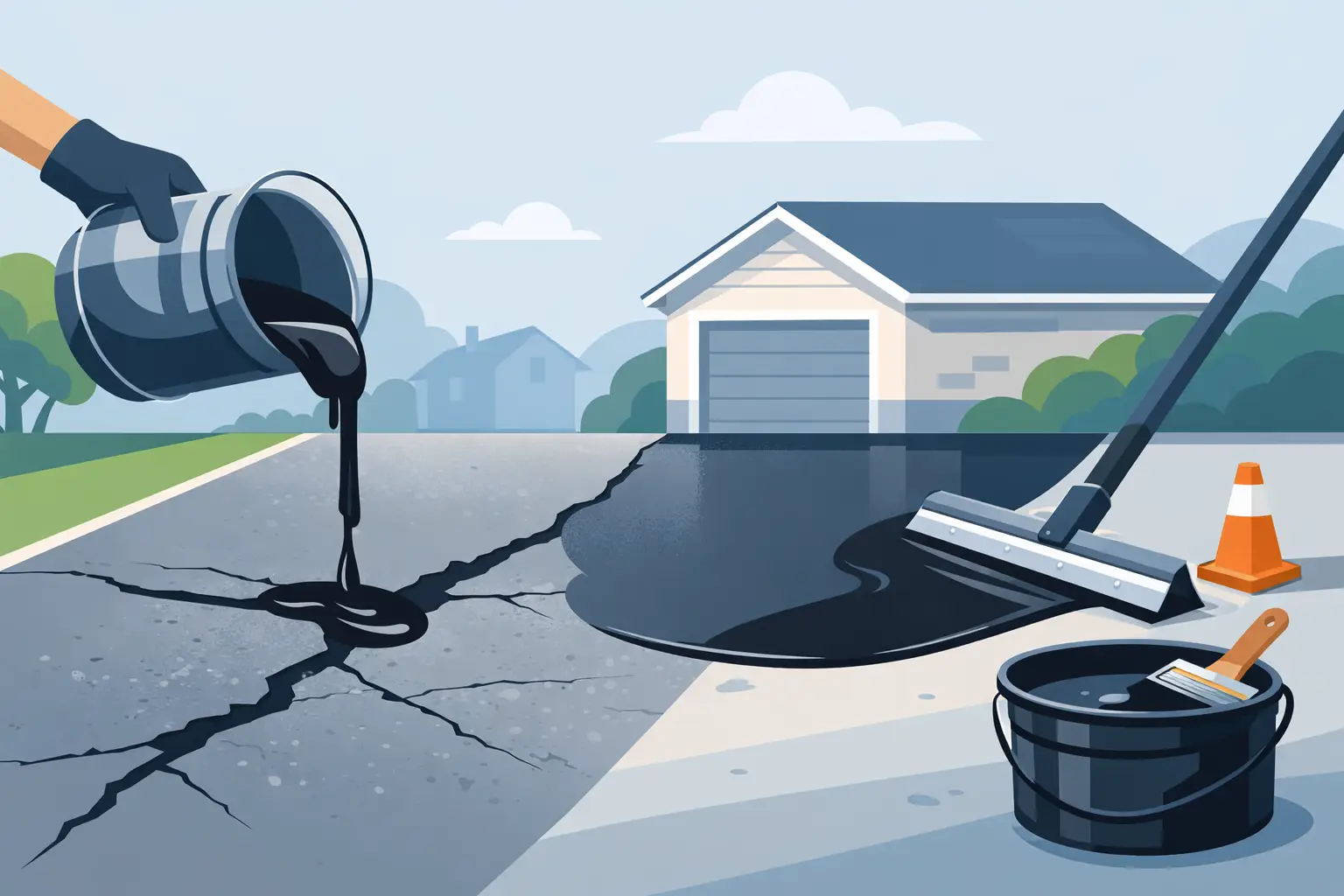
A driveway can look dramatically better after sealcoating, but homeowners should not expect a fresh black coating to repair every visible defect. Can sealcoat fill driveway cracks? Only very small, surface-level imperfections may become less noticeable. Meaningful cracks need to be cleaned and repaired before sealcoat is applied if you want lasting protection.
That distinction matters in the Hudson Valley. Rain, snow, freeze-thaw cycles, road salt, and summer heat all put pressure on asphalt. Once water enters an open crack, it can weaken the base beneath the driveway and turn a manageable repair into a larger problem. Sealcoating is an excellent protective treatment, but it works best as part of the right repair process.
Can Sealcoat Fill Driveway Cracks?
Sealcoat is a protective coating, not a structural crack filler. It creates a thin, even layer across the asphalt surface to help shield it from water, sunlight, oxidation, vehicle fluids, and normal wear. Because it is applied as a coating, it does not have the thickness or flexibility needed to bridge most cracks reliably.
Very fine hairline cracks can sometimes be darkened or visually softened after sealcoating. From a distance, they may be far less noticeable. However, the crack itself is still present, and it can reopen as the asphalt expands and contracts with changing temperatures.
Cracks wider than a hairline should be properly filled before sealcoating. A professional crack filler is designed to adhere within the crack and move with the pavement to a degree. Once the repair has cured, sealcoat can be applied over the driveway to give the entire surface a consistent, protected finish.
Trying to use sealcoat as a shortcut usually leads to disappointment. The driveway may look good for a short time, but the untreated cracks can remain open below the coating and continue allowing water into the pavement.
Why Crack Repair Comes Before Sealcoating
Asphalt driveways are built in layers. The black surface you see is only the top layer. When cracks allow water through that surface, moisture can reach the aggregate base below. In winter, that water freezes, expands, and places added pressure on the pavement. Repeated freeze-thaw cycles can widen cracks, loosen material, and contribute to potholes or sinking areas.
Crack repair closes the opening where water enters. Sealcoating then protects the surrounding asphalt from further weathering. Together, these services address both the immediate issue and the long-term condition of the driveway.
For property owners, the order is simple: repair first, seal second. This is especially valuable for driveways and parking areas in Poughkeepsie, Dutchess County, and throughout the Hudson Valley, where winter conditions can expose weak spots quickly.
A properly prepared surface also looks better. Filling cracks before sealing helps prevent obvious lines, uneven absorption, and premature failure in the finished coating. The result is a cleaner appearance and a driveway that is better prepared for the seasons ahead.
Which Cracks Need More Than Sealcoat?
Not every crack has the same cause or repair method. An experienced pavement-maintenance contractor looks at the crack pattern, width, depth, and condition of the surrounding asphalt before recommending work.
Hairline cracks
Fine surface cracks may be mostly cosmetic, particularly if the asphalt is otherwise firm and in good condition. Sealcoating can improve their appearance, but it should not be viewed as a permanent repair. If those cracks are beginning to spread, targeted crack filling may still be the smarter choice.
Straight or irregular open cracks
Cracks that are visibly open need crack filling before sealcoating. These openings are common as asphalt ages and loses flexibility. Repairing them early can keep water from reaching the base and help preserve the rest of the driveway.
Alligator cracking
Alligator cracking is a network of connected cracks that resembles reptile skin. This pattern often indicates that the pavement or base has weakened under traffic or moisture. Crack filler and sealcoat alone are not usually enough. The damaged section may need removal and patching before the surface can be sealed.
Potholes, crumbling edges, and low spots
Sealcoat cannot repair missing asphalt, crumbling pavement edges, or depressions that collect water. These conditions call for patching or more substantial asphalt repair. Applying sealcoat over them may improve color, but it will not restore strength, drainage, or a smooth driving surface.
What a Proper Driveway Sealing Job Includes
The quality of preparation often determines how well a sealcoating job performs. A driveway should not simply be coated over dirt, loose material, and open cracks. The surface needs attention first.
A professional process begins with evaluating the driveway for cracks, failed areas, oil spots, drainage concerns, and edge deterioration. Loose debris is removed, and the asphalt is cleaned so the coating can bond correctly. Open cracks are prepared and filled with an appropriate material. If there are damaged areas that need patching, those should be addressed before the driveway is sealed.
Once repairs are ready and conditions are suitable, sealcoat is applied evenly across the surface. The coating needs time to dry and cure before vehicles return. Weather, temperature, shade, and humidity all affect scheduling, which is why dependable contractors watch the forecast rather than rush an application.
At Exodus Proseal, the goal is not to cover up an issue and leave property owners with a short-lived result. Proper crack repair and careful surface preparation help make sealcoating a worthwhile maintenance investment.
When Should You Sealcoat After Crack Repair?
The answer depends on the repair material used, the condition of the asphalt, and the weather. Crack filler needs adequate time to set before sealcoat is applied. Fresh patching also needs time to cure before it can be coated, often much longer than a simple crack repair.
For an established driveway in generally good condition, periodic sealing can help slow oxidation and protect the asphalt surface. Many property owners schedule maintenance every few years, but there is no one schedule that fits every driveway. Traffic levels, sun exposure, drainage, snow removal practices, and the age of the pavement all make a difference.
A driveway that is turning gray, showing small cracks, or losing its smooth finish is worth inspecting. Acting while the issues are still limited is typically more affordable than waiting until cracks spread and the pavement begins to break apart.
Signs It Is Time to Call for an Assessment
You do not need to wait for a pothole to take driveway maintenance seriously. If cracks are widening, vegetation is growing through them, or water sits on the surface after rain, the driveway deserves attention. Faded asphalt, loose gravel, rough edges, and repeated cracking in the same area can also point to a developing problem.
Commercial property owners should pay close attention to cracks in parking areas, entrances, and pedestrian paths. Beyond appearance, deteriorating asphalt can create trip hazards, affect vehicle traffic, and make a property feel less maintained. Timely crack repair and sealcoating support a safer, more professional-looking property.
A Better Approach Than Covering Cracks
Sealcoating is one of the most effective ways to protect sound asphalt, but it is not a substitute for repairs. The best results come from matching the service to the condition of the pavement: fill open cracks, patch failed areas, correct drainage concerns where possible, and then apply a quality protective coating.
If you can see cracks in your driveway, take a close look after the next rain. Water that disappears into those openings is a reason to address them before another Hudson Valley winter has the chance to make them worse.
Leave a Reply