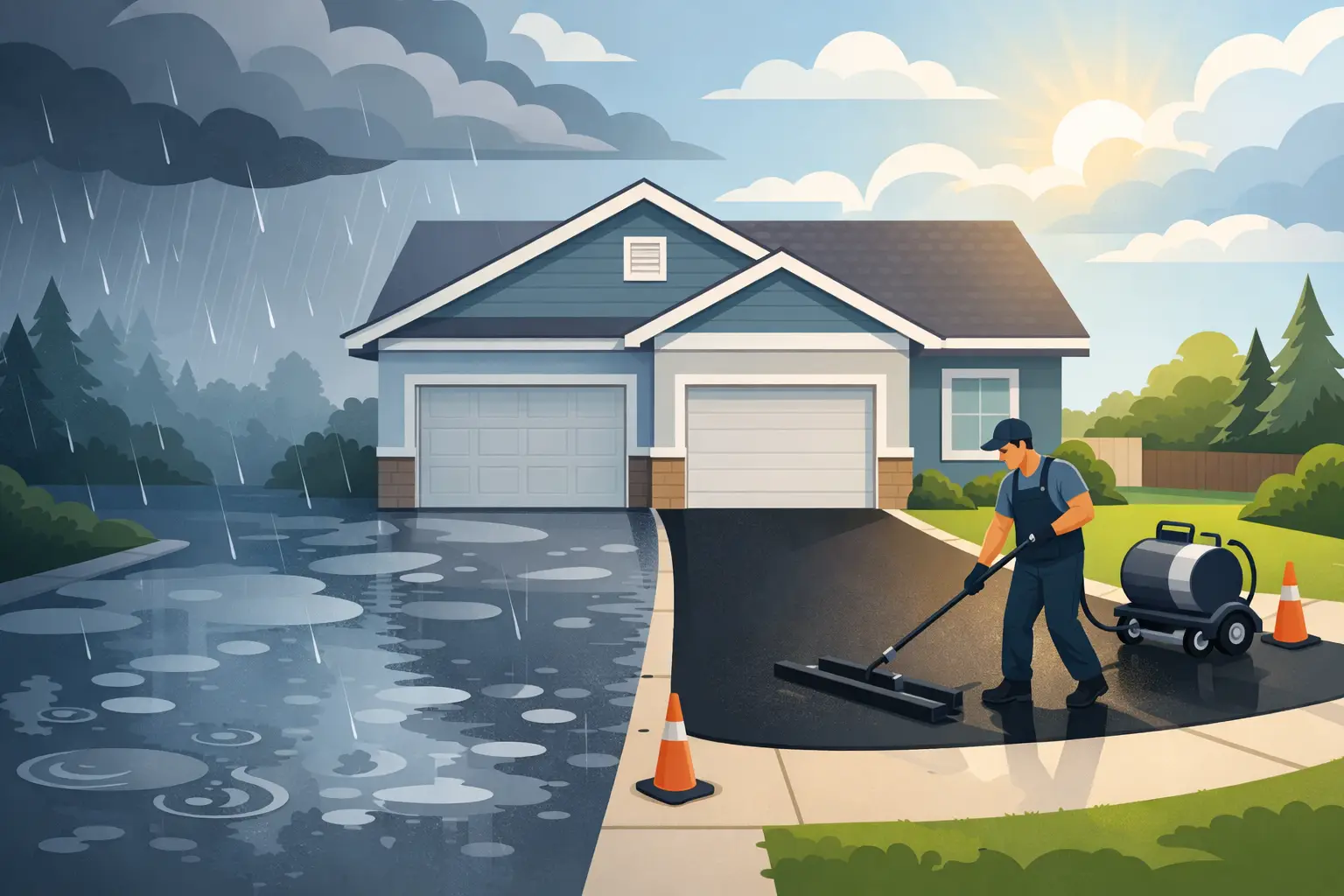
A rainstorm can throw off a driveway-sealing plan, especially when the forecast changes quickly across the Hudson Valley. Sealcoating driveway after rain is not simply a matter of waiting until puddles disappear. The asphalt, cracks, edges, and low spots all need time to dry before a protective coating can bond properly.
Applying sealer over a damp surface may save a day on the calendar, but it can cost far more in appearance and performance. A properly timed application helps protect your driveway from water, sun, vehicle traffic, and the seasonal wear that Poughkeepsie and Dutchess County properties experience every year.
Can You Sealcoat a Driveway After Rain?
Yes, but only after the driveway is fully dry and the weather conditions support application and curing. A dry-looking surface is not always a dry surface. Moisture can remain inside cracks, along driveway edges, in shaded areas, and beneath debris after rainfall.
Sealcoat needs direct contact with clean, dry asphalt. If water is trapped between the pavement and the coating, the sealer may not adhere evenly. It can dry with blotchy color, peel in places, or wear away much sooner than expected. Water also tends to collect in the same low areas where asphalt is already under stress, which makes those spots especially important to inspect.
For most driveways, waiting at least 24 hours after a light rain is a reasonable starting point when warm, sunny, breezy weather follows. After steady rain, high humidity, cool temperatures, or several cloudy days, 48 hours or longer may be necessary. There is no single wait time that fits every property.
Why Rain and Moisture Cause Sealcoating Problems
Sealcoating is a protective maintenance treatment, not a cover-up for water problems. Its job is to form an even barrier over prepared asphalt. When moisture interferes with that process, the coating cannot provide the uniform protection a driveway needs.
The most common issue is poor adhesion. Sealer placed over damp asphalt may appear acceptable at first, then begin to flake or wear unevenly as vehicles use the driveway. This is particularly frustrating because the surface may have been clean and freshly repaired before the rain arrived.
Moisture in cracks creates another concern. Cracks allow water to move below the surface, where it can weaken the base material over time. A rain delay is a good opportunity to make sure cracks have been cleaned, dried, and properly filled before sealcoating begins. Applying sealer over active or unprepared cracks does not stop them from spreading.
Humidity matters as well. Even without a second rainstorm, humid air slows evaporation and curing. Cool, damp mornings in the Hudson Valley can leave dew on asphalt, while shaded driveways may remain damp long after nearby pavement has dried. The right decision depends on actual site conditions, not just whether the rain stopped yesterday.
How Long Should You Wait to Sealcoat After Rain?
The best answer is: wait until the pavement is dry and the forecast provides a reliable curing window. As a practical guideline, a light shower followed by warm sun and low humidity may allow sealing the next day. A soaking rain often requires at least two dry days, particularly if the driveway has cracks, poor drainage, heavy shade, or low areas that hold water.
A professional contractor should inspect the entire surface before starting. Areas near garages, retaining walls, trees, and the bottom of sloped driveways often dry last. A driveway can look ready from the street while still holding moisture in the places that matter most.
It also helps to consider the forecast after application. Fresh sealcoat needs time to cure without rain, heavy dew, or vehicle traffic. If rain is expected shortly after the planned application, postponing the work is usually the smarter choice. Reliable driveway maintenance means protecting the quality of the completed job, not rushing to meet an arbitrary date.
Signs Your Driveway Is Ready
A driveway should be visibly free of puddles, dark damp patches, and morning dew. Cracks should not contain water, and dirt or leaves should not be stuck to wet areas. The asphalt should feel dry across shaded sections as well as sunny sections.
Pay attention to drainage. If rainwater consistently pools in one location, sealing can improve the surface’s protection but will not correct the underlying slope or drainage issue. Standing water should be addressed before it has a chance to accelerate cracking, erosion along the edges, or pavement failure.
Temperature is another part of the decision. Sealcoat performs best when applied within the product manufacturer’s recommended temperature range and when temperatures remain suitable during the curing period. A dry driveway on a cold day may still not be ready for a quality application.
What to Do if Rain Interrupts Your Sealing Schedule
Do not try to speed up drying with guesswork. Sweeping away leaves and debris once the surface has dried is helpful, but sealing over damp pavement is not. A leaf blower can clear loose surface moisture in limited situations, yet it cannot remove water held in cracks, porous asphalt, or the pavement base.
If rain arrives before a scheduled appointment, the right contractor will reassess conditions and communicate clearly about timing. Weather delays are part of responsible asphalt maintenance in this region. A crew that insists on applying sealer to a questionable surface may be prioritizing a packed schedule over the life of your driveway.
Property owners can help by keeping vehicles off the driveway when possible, moving portable items such as basketball hoops or planters, and making sure access is available once a new date is confirmed. After the surface is sealed, follow the contractor’s guidance on foot traffic, vehicle traffic, and when to replace heavier items.
Rain After Sealcoating: Is the Job Ruined?
Not necessarily. The outcome depends on how long the sealer had to cure before rain began, the amount of rainfall, temperatures, humidity, and the condition of the asphalt. A brief shower after the coating has had adequate time to set may cause little or no damage. Heavy rain soon after application can leave marks, wash material from edges, or interfere with curing.
Avoid driving on a freshly sealed driveway just because the rain has stopped. Water and humidity can extend the drying time, and tire marks can become permanent if the coating has not hardened enough. If you notice pooling, streaking, bare spots, or soft areas after weather interrupts a new application, take photos and contact the contractor before attempting repairs yourself.
A reputable local contractor will evaluate the surface and explain whether it needs additional drying time, a touch-up, or more substantial correction. The answer should be based on what happened at your property, not a one-size-fits-all promise.
Protecting Hudson Valley Asphalt Between Rainstorms
Rain is unavoidable, but water damage is not always inevitable. Keeping your driveway clean, repairing cracks early, and maintaining drainage can reduce the amount of water that reaches the asphalt base. Sealcoating on an appropriate schedule provides another layer of protection against moisture, oxidation, road salt residue, and everyday wear.
Older driveways deserve particular attention after wet weather. Look for widening cracks, loose edges, depressions, and places where water remains after the rest of the driveway dries. These are early warnings that routine maintenance may be needed before a smaller repair becomes a larger paving expense.
For homeowners and property managers, the best time to schedule is when conditions are favorable, not merely when the calendar says it is time. Exodus Proseal plans applications around site conditions and Hudson Valley weather because a clean, dry, properly prepared surface gives your driveway the durable finish it deserves.
If rain delays your project, consider it a worthwhile pause. A few extra dry hours can make the difference between a coating that simply looks fresh and one that protects your pavement through the seasons ahead.
Leave a Reply