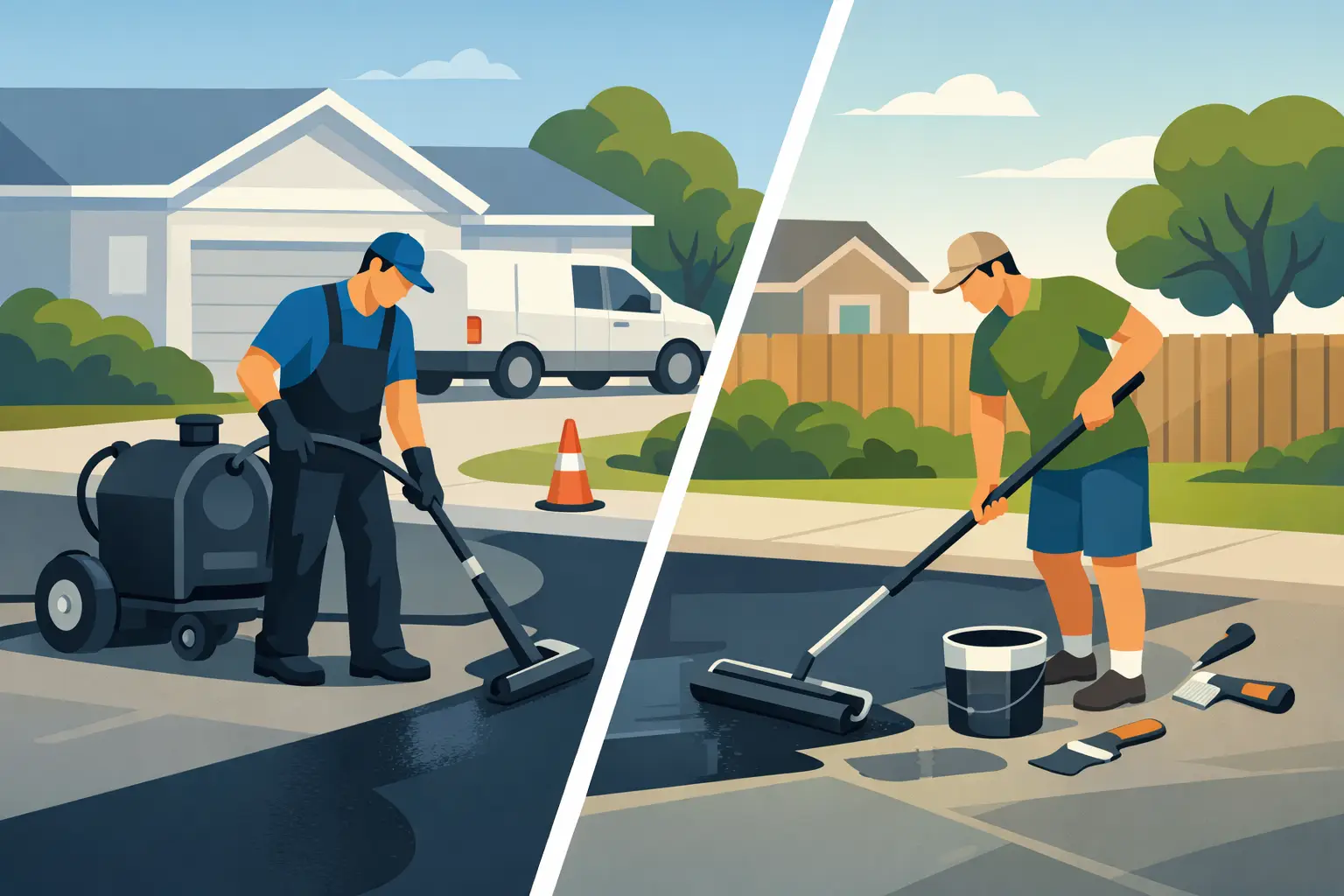
A driveway can look fine from the street while water is already working into small cracks, weakening the asphalt beneath the surface. For Hudson Valley property owners, the choice between professional driveway sealing vs DIY often comes down to more than the price of a bucket of sealer. It comes down to preparation, timing, material quality, and whether the work will hold up through another cycle of rain, heat, snow, and freeze-thaw weather.
A do-it-yourself project can be a reasonable option for a small, lightly worn driveway in good condition. But sealing is not simply a matter of spreading a black coating over asphalt. The condition of the pavement, the quality of crack repair, and the application process all affect how well the surface is protected. Knowing where the real differences lie can help homeowners and business owners make a sound decision.
Professional Driveway Sealing vs DIY: The Real Difference
Both professional sealing and DIY sealing aim to protect asphalt from water, sunlight, vehicle fluids, and normal wear. A properly sealed surface can improve curb appeal and slow the drying, oxidation, and cracking that eventually lead to larger repairs. The difference is in how consistently the work is prepared and completed.
Professional crews arrive with commercial-grade equipment, appropriate materials, and the experience to spot conditions that can affect the result. They can assess whether cracks need attention first, whether the driveway is too damp or dirty for sealing, and whether a thin or uneven area requires more care. The finished appearance matters, but so does the protective layer underneath it.
DIY sealing puts the homeowner in control of the schedule and upfront cost. It also puts the homeowner in charge of cleaning, edging, crack filling, mixing material, managing application thickness, and watching the weather. For some people, that trade-off is worthwhile. For others, one uneven coat, missed crack, or poorly timed rainy day can turn a weekend project into a frustrating expense.
Preparation Determines How Long Sealer Lasts
The most overlooked part of driveway sealing is the work done before any sealer is applied. Sealer needs a clean, dry, stable surface to bond properly. Dirt, loose debris, oil spots, grass along the edges, and standing moisture can all interfere with adhesion.
A professional application typically begins with a careful inspection and thorough surface cleaning. Crews clear debris, trim back edges as needed, and make sure the pavement is dry enough for the product being used. Oil-stained areas may need special treatment because sealer does not adhere well to active oil residue.
Crack repair is just as important. Small cracks give water a direct route below the asphalt. Once water reaches the base, freeze-thaw cycles can widen the damage and cause sections of pavement to shift, sink, or break apart. Filling cracks before sealing helps protect the driveway, but it must be done with the right material and enough curing time.
A DIY job can achieve good preparation, but it takes patience and close attention. Sweeping alone is rarely enough. Homeowners may need a blower, stiff brush, cleaner for problem areas, crack filler, and enough dry weather to let repairs set properly. Skipping these steps may save time on application day, but it can shorten the useful life of the sealer.
When Cracks Need More Than Sealer
Sealcoating is preventative maintenance, not a structural repair. It will not fix alligator cracking, deep potholes, soft spots, major settling, or pavement that is crumbling at the edges. Applying sealer over serious damage may temporarily darken the surface, but it does not correct the underlying problem.
If a driveway has a few narrow cracks and otherwise sound asphalt, crack repair and sealing may be the right next step. If the cracks are widespread or the pavement has movement beneath it, a professional evaluation can prevent money from being spent on a cosmetic fix that will not last.
Materials and Equipment Affect the Finish
Store-bought driveway sealer can be useful for touch-ups and small projects, but products vary widely in quality, coverage, and application requirements. Some need frequent stirring, some are difficult to spread evenly, and some are not designed for heavy vehicle traffic or larger surfaces. Reading the label is essential, especially regarding surface preparation, temperature range, drying time, and coverage rate.
Professional contractors use equipment designed for consistent application across the entire driveway or parking area. Depending on the surface and job conditions, that may include spray systems, squeegees, brushes, and tools for clean edging. The goal is an even protective coat without puddling, thin patches, splatter on nearby surfaces, or heavy buildup in low spots.
The difference is especially noticeable on long driveways, wide turnaround areas, and commercial parking spaces. Maintaining a consistent coat by hand over a large area is physically demanding, and it is easy to lose track of coverage. Professional equipment also helps crews complete the work efficiently while keeping the property neat.
Cost Is More Than the Price of Materials
DIY sealing usually has a lower immediate cost. You can buy sealer, crack filler, application tools, cleaning supplies, and protective gear for less than a professional service call. If the driveway is small, in solid condition, and you already own some of the needed tools, that savings can be meaningful.
The full cost should also include time, physical effort, cleanup, and the possibility of redoing a poor application. A typical DIY job may involve hauling heavy containers, preparing the pavement, working in warm weather, keeping vehicles off the driveway, and cleaning tools before the material dries. It can take longer than expected, particularly when cracks or stains need attention.
Professional sealing costs more upfront because it includes skilled labor, commercial materials, equipment, preparation, and scheduling. In return, property owners receive a finished service rather than a project to manage. For busy homeowners and business owners, dependable timing and reduced disruption can be worth the difference.
The best value is not always the lowest initial price. A properly completed sealing job that helps delay costly asphalt repairs can be a practical investment in the property.
Hudson Valley Weather Raises the Stakes
In Poughkeepsie, Dutchess County, and the surrounding Hudson Valley, asphalt faces a demanding mix of seasonal conditions. Summer heat and direct sunlight dry out the surface. Rain finds its way into small openings. Winter moisture freezes and expands, putting pressure on cracks and weak areas. Plows, de-icing products, and repeated vehicle traffic add further wear.
That is why timing matters. Sealer should be applied during suitable weather, with temperatures and dry conditions that allow the material to cure properly. Applying it too late in the season, before rain, or on a damp surface can affect adhesion and finish quality.
A local professional understands that a driveway schedule cannot be based on the calendar alone. Conditions on the pavement and the forecast both matter. This is particularly helpful for property owners who want the work completed efficiently without guessing whether the surface is ready.
When DIY Makes Sense
DIY can be a practical choice when the driveway is small, relatively new, and free of significant cracks, drainage issues, or surface deterioration. It can also make sense for homeowners who are comfortable handling prep work, can follow product directions closely, and have a clear stretch of appropriate weather.
The project is less suited to large driveways, steep grades, heavily used parking areas, or surfaces with visible damage. It may also be a poor fit when the property owner cannot keep vehicles off the pavement for the recommended curing period. In these situations, the risk is not only an uneven appearance. It is spending money on material without getting the level of protection the asphalt needs.
When Professional Sealing Is the Better Choice
Professional service is usually the stronger option when durability, appearance, and dependable scheduling matter. It is especially useful for older driveways, surfaces with cracks that need proper attention, commercial properties, and larger residential layouts where application consistency is difficult to manage by hand.
A qualified local contractor can also help property owners understand whether sealing is appropriate now or whether repairs should come first. That straightforward guidance is valuable because not every driveway needs the same service at the same time.
For homeowners and businesses that want a clean, protected asphalt surface without taking on the labor and uncertainty themselves, Exodus Proseal provides professional driveway sealing and crack repair with the local accountability Hudson Valley properties deserve.
Your driveway does not need to be failing before it receives attention. Addressing small cracks and surface wear while the asphalt is still serviceable gives you more options, protects the appearance of your property, and helps keep a manageable maintenance job from becoming a major repair.
Leave a Reply