A few small cracks near the garage door can become a much larger problem after one Hudson Valley winter. Water works into those openings, freezes, expands, and weakens the asphalt from below. Professional driveway sealing helps slow that damage by restoring a protective barrier before routine wear turns into costly repairs or replacement.
For homeowners and property owners in Poughkeepsie, Dutchess County, and surrounding Hudson Valley communities, driveway maintenance is not just about appearance. It is a practical way to protect an asphalt surface from rain, road salt, vehicle traffic, summer sun, and repeated freeze-thaw cycles. A properly maintained driveway looks cleaner, holds up better, and supports the value of the property around it.
What Professional Driveway Sealing Does for Asphalt
Asphalt contains binders that help hold the surface together. Over time, sunlight, oxygen, water, automotive fluids, and traffic gradually dry and wear down those binders. The result is a driveway that fades from black to gray, becomes rougher, and develops small surface cracks.
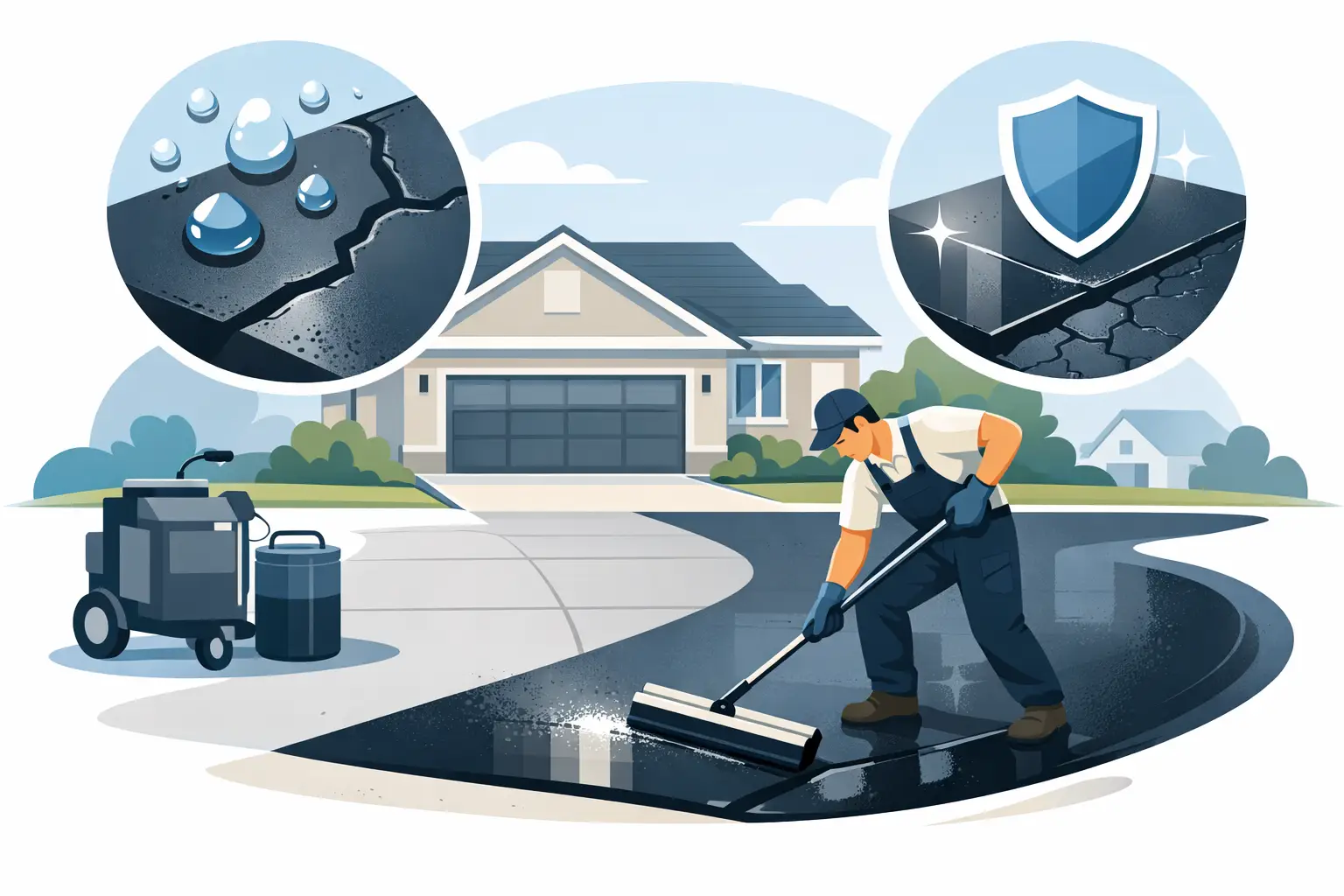
Professional driveway sealing applies a protective coating over sound asphalt. That coating helps reduce exposure to moisture and other damaging elements while improving the driveway’s finished appearance. It is preventative maintenance, not a cure for every asphalt problem. When applied at the right time and with proper preparation, sealing can help extend the useful life of a driveway and delay the expense of major repairs.
The difference is often visible right away, but the real value is what happens over the following seasons. A sealed driveway is better positioned to resist the steady cycle of weather and use that causes unprotected pavement to deteriorate.
Sealing is not the same as crack repair
A sealcoat covers the surface, but it cannot stabilize a driveway that already has serious structural damage. Open cracks need to be cleaned and repaired first so water has fewer paths beneath the pavement. Areas with deep depressions, crumbling edges, alligator cracking, or base failure may need more than a surface treatment.
This is why an on-site evaluation matters. An experienced contractor can tell the difference between normal aging that responds well to crack filling and sealing, and damage that calls for patching or more extensive asphalt work. Spending money on sealer over failing pavement may improve the color temporarily, but it will not correct the cause of the failure.
The Right Time for Driveway Sealing in the Hudson Valley
Timing depends on the condition and age of the asphalt, as well as the weather. New asphalt generally needs time to cure before it is sealed. Sealing it too soon can interfere with that process, so it is best to follow a contractor’s recommendation based on the specific installation and surface condition.
For established driveways, many properties benefit from professional driveway sealing every two to three years. That schedule is not a hard rule. A driveway with light residential traffic and good drainage may go longer, while a busy parking area, steep driveway, or surface exposed to frequent shade and moisture may need attention sooner.
Dry weather and appropriate temperatures are also essential. The surface must be clean and dry so the coating can adhere properly and cure as intended. In the Hudson Valley, that means scheduling should account for rain, cool nights, falling leaves, and seasonal changes. A dependable contractor will not rush an application simply to keep a date on the calendar when conditions are wrong for quality work.
What a Quality Sealing Job Should Include
The prep work often determines how well a driveway sealing job performs. A clean, stable surface gives the protective coating a proper foundation. Skipping preparation may save time in the moment, but it can lead to uneven coverage, poor adhesion, and a shorter-lasting finish.
A professional service typically begins by clearing dirt, leaves, loose debris, and vegetation from the pavement. Oil spots and problem areas should be addressed, and visible cracks should be prepared and repaired before sealing. Edges, walkways, garage doors, and landscaping need careful protection so the finished work looks neat rather than rushed.
The sealant should then be applied evenly, including along edges and areas that receive regular tire traffic. The driveway must be given adequate time to dry before vehicles return. Exact drying time varies with temperature, humidity, shade, and product conditions, which is why property owners should follow the crew’s guidance instead of assuming the surface is ready after a set number of hours.
At Exodus Proseal, the goal is straightforward: provide the careful surface preparation, durable protection, and dependable on-site service that local property owners expect from a pavement-maintenance contractor.
Signs Your Driveway Should Be Evaluated
Fading color alone does not always mean a driveway is in trouble, but it is often an early signal that the surface is losing protection. Cracks, rough patches, water that sits after rain, and broken edges deserve closer attention. The earlier these conditions are addressed, the more options a property owner usually has.
Watch for these four common signs:
- Hairline or widening cracks that can allow water below the surface.
- A dull gray appearance, exposed aggregate, or a dry, worn texture.
- Puddles that remain in the same areas after rain.
- Crumbling edges, loose material, or areas where the surface is beginning to break apart.
Not every crack requires a major repair, and not every faded driveway needs immediate sealing. The condition of the surface, drainage, traffic level, and age of the asphalt all matter. Still, waiting until the driveway has widespread breakup usually means a more expensive project than routine maintenance would have required.
Residential and Commercial Needs Are Different
A residential driveway needs to handle daily vehicles, occasional delivery trucks, snow removal, and changing weather. Homeowners often want a clean, well-kept appearance, but they also want to avoid replacing asphalt before it should be necessary. Regular crack repair and sealing help support both goals.
Commercial properties have additional concerns. Parking areas and drive lanes affect the first impression customers, tenants, and visitors receive. They also need to remain functional and presentable without disrupting normal operations. A small business, office, retail site, or multifamily property may need maintenance planned around customer access, tenant parking, or operating hours.
In either setting, the best approach is to address issues before they become disruptive. Reliable scheduling, clear communication about preparation and curing time, and respectful crews matter just as much as the finished appearance.
How to Protect the Driveway Between Service Visits
Professional sealing is a major part of asphalt maintenance, but simple habits can help preserve the surface between appointments. Keep leaves and debris from collecting along the edges, especially where they trap moisture. Avoid allowing oil or fuel spills to sit on the pavement, and direct downspouts away from the driveway whenever possible.
Be mindful of heavy loads and sharp turning from parked vehicles, particularly during hot weather when asphalt can soften. Snow removal should be done carefully to avoid catching the pavement with metal blade edges. If a new crack appears, arranging an evaluation early is usually more practical than hoping it stays small.
A driveway does not have to be perfect to be worth maintaining. It simply needs the right attention at the right stage. Addressing cracks, drainage concerns, and surface wear while they are manageable gives your asphalt a better chance to stay safe, attractive, and serviceable through the next Hudson Valley season.
Leave a Reply