A driveway can look tired long before it is truly failing. Faded color, small cracks, and a rough surface often make homeowners wonder whether they need a major repair or simply better maintenance. The sealcoating vs resurfacing driveway decision comes down to one practical question: Is the asphalt still structurally sound enough to protect, or has it deteriorated enough to need a new surface?
For property owners in Poughkeepsie, Dutchess County, and across the Hudson Valley, timing matters. Our freeze-thaw cycles, rain, road salt, and summer heat can turn a minor asphalt issue into a much larger expense when water reaches the base beneath the driveway. Choosing the right service early can extend the life of your pavement and help you avoid replacement before it is necessary.
What sealcoating does for an asphalt driveway
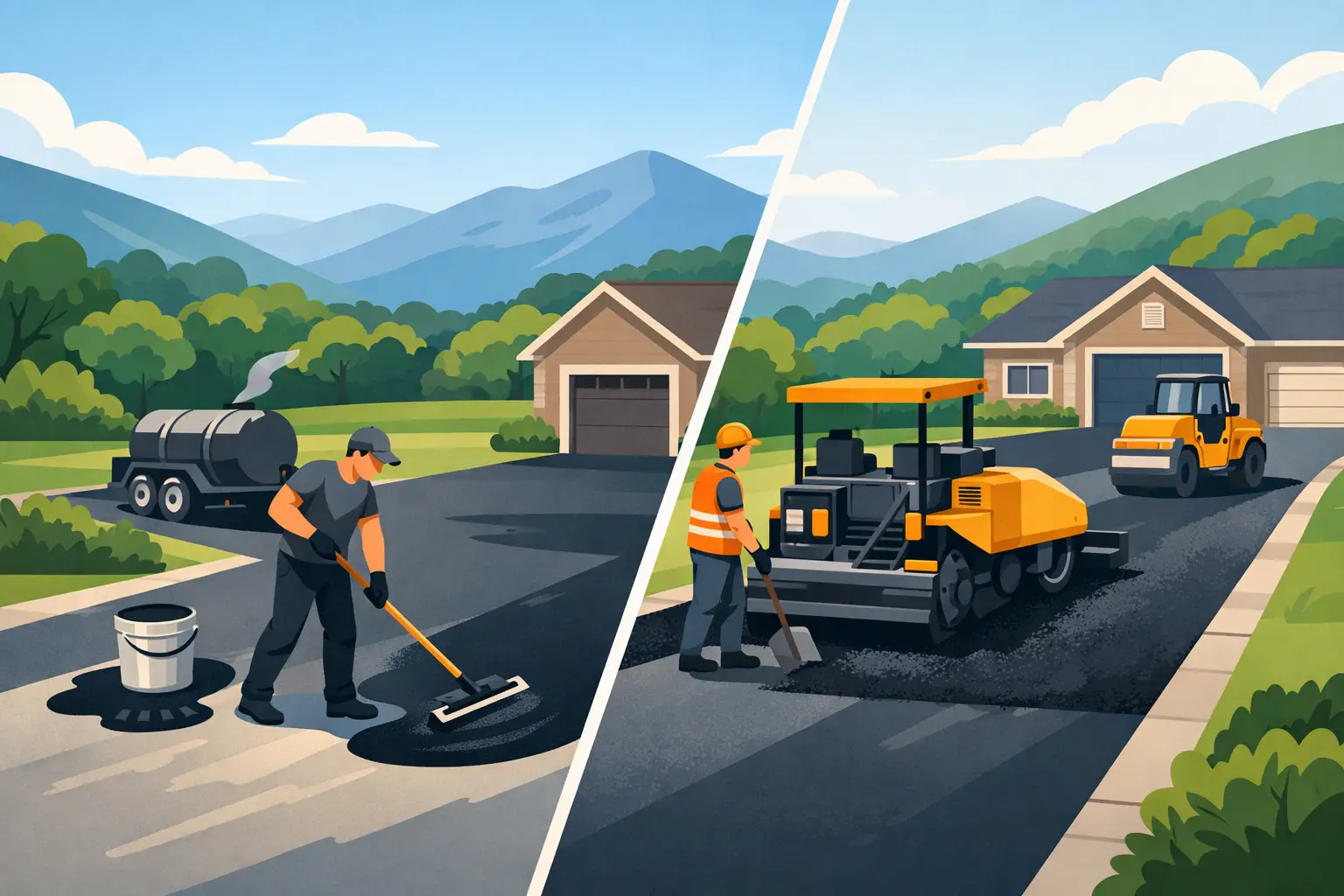
Sealcoating is a protective treatment applied over existing asphalt. It restores the dark, finished appearance of the surface while creating a barrier against water, sun exposure, oil drips, and everyday wear. It is not a paving product or a way to build up damaged asphalt. Think of it as routine protection for a driveway that still has a stable foundation.
A professional sealcoating job generally begins with cleaning the surface and addressing cracks. Cracks need attention before the sealer is applied because an unfilled opening still gives water a path into the pavement. Once the driveway is prepared, the sealcoat is applied evenly and allowed to cure before vehicles return.
Sealcoating is often the sensible choice when the driveway has faded from black to gray, has light surface wear, and contains small cracks that can be properly repaired. It is also a good maintenance step for newer asphalt after it has cured. Regular sealing helps slow oxidation, the natural process that makes asphalt dry, brittle, and more likely to crack.
For homeowners, the benefit is straightforward: modest maintenance today can help preserve curb appeal and delay the cost of major work tomorrow. For business owners, a clean, sealed parking area or drive lane also supports a safer, more professional-looking property.
When resurfacing is the better repair
Resurfacing, sometimes called an asphalt overlay, is a more substantial repair. A paving contractor prepares the existing pavement, corrects problem areas as needed, and installs a new layer of hot asphalt over the old surface. The result is a fresh driving surface with more material and more structural value than sealcoating can provide.
This option makes sense when the old driveway has widespread cracking, uneven areas, surface deterioration, or a worn appearance that goes beyond what crack filling and sealer can address. If the asphalt is still supported by a sound base, an overlay may restore its function and appearance without the cost of a full tear-out and replacement.
However, resurfacing is not the right answer for every failing driveway. If there are deep depressions, major heaving, standing water caused by poor drainage, or large alligator cracks – the interconnected pattern that resembles reptile skin – the base may be compromised. Placing new asphalt over a failed base can create a better-looking driveway for a short time, but the original problems can return through the overlay.
In those cases, sections may need to be removed and rebuilt, or the entire driveway may require replacement. A dependable contractor should be clear about that distinction rather than recommending an overlay as a cure-all.
Sealcoating vs. resurfacing a driveway: the real differences
The biggest difference is purpose. Sealcoating preserves an existing asphalt surface. Resurfacing renews a worn surface with a new asphalt layer. One is preventive maintenance; the other is a corrective paving repair.
The cost difference follows the amount of labor and material involved. Sealcoating is usually far less expensive because it uses a thin protective coating rather than new hot-mix asphalt. Resurfacing costs more, but it can be a strong value when the driveway has aged past the point where surface protection alone will help.
The expected service life is different as well. A properly maintained sealcoat application is typically repeated on a regular schedule, often every few years depending on traffic, exposure, and the condition of the pavement. An asphalt overlay is intended to last much longer, though its lifespan still depends on drainage, base stability, winter maintenance, and whether cracks are addressed promptly.
Appearance can be misleading. A driveway may look gray and weathered but still be an excellent candidate for crack repair and sealcoating. On the other hand, a freshly darkened surface cannot correct soft spots, broken edges, or structural cracks underneath. That is why a close inspection matters more than color alone.
Signs your driveway can likely be sealcoated
Sealcoating is worth considering when the asphalt feels firm underfoot and under vehicles, water drains reasonably well, and damage is limited to small cracks or surface aging. Some minor roughness is normal, especially after years of Hudson Valley weather, but the driveway should not be crumbling, sinking, or breaking apart in broad sections.
Pay attention to edges and low spots. Small edge cracks can often be repaired as part of a maintenance plan. But if the edges are collapsing or a low area holds water for days after rain, more extensive repair may be needed before a protective coating is applied.
A well-timed sealcoat can also be a smart choice after crack repair. Treating cracks early helps reduce water intrusion, while sealing the full surface limits additional weathering across the driveway.
Signs resurfacing or replacement should be discussed
Large areas of connected cracking are a warning sign, especially where vehicles regularly travel or turn. So are potholes, deep ruts, noticeable dips, and sections that feel soft. These conditions may point to a weakened base rather than a surface-only problem.
Drainage deserves special attention in the Hudson Valley. Water that runs toward a garage, collects at the bottom of a sloped driveway, or sits near pavement edges can undermine asphalt over time. Before resurfacing, the drainage issue should be evaluated. Otherwise, the new surface may be exposed to the same conditions that damaged the old one.
Tree roots can create another complication. If roots have lifted the pavement, simply applying sealcoat will not level it, and resurfacing without correcting the movement may not hold up as expected. The best repair depends on how much of the driveway is affected and whether the underlying cause can be managed.
How to make the right choice for your property
Start with condition, not just budget. Sealcoating is the better value when it protects asphalt that is still in good working shape. Resurfacing becomes the better investment when the surface has worn beyond maintenance but the foundation remains dependable. Spending less on sealer for a driveway with serious structural failure can mean spending twice later.
It also helps to consider how the driveway is used. A lightly used residential driveway may age differently than a commercial lot, a shared multifamily entrance, or a property with delivery traffic. Heavy vehicles, frequent turning, and plowing can accelerate wear in specific areas, making localized repair part of the conversation.
Ask for a straightforward assessment of the cracks, drainage, base condition, and edges. A professional should explain what the recommended service can accomplish and what it cannot. At Exodus Proseal, the focus is on practical maintenance and repair recommendations that fit the actual condition of the asphalt, not a one-size-fits-all answer.
Do not wait for small cracks to become a base problem
The most cost-effective driveway decision is often made before the damage looks dramatic. Once water enters cracks, freezes, expands, and reaches the stone base, the repair options become more involved. Scheduling an inspection while the pavement is still stable gives you more choices, whether that means crack repair and sealcoating now or planning resurfacing before deterioration spreads.
A well-maintained driveway does more than improve the look of a property. It gives water fewer places to enter, supports safer daily use, and protects an investment that has to stand up to every Hudson Valley season.
Leave a Reply