
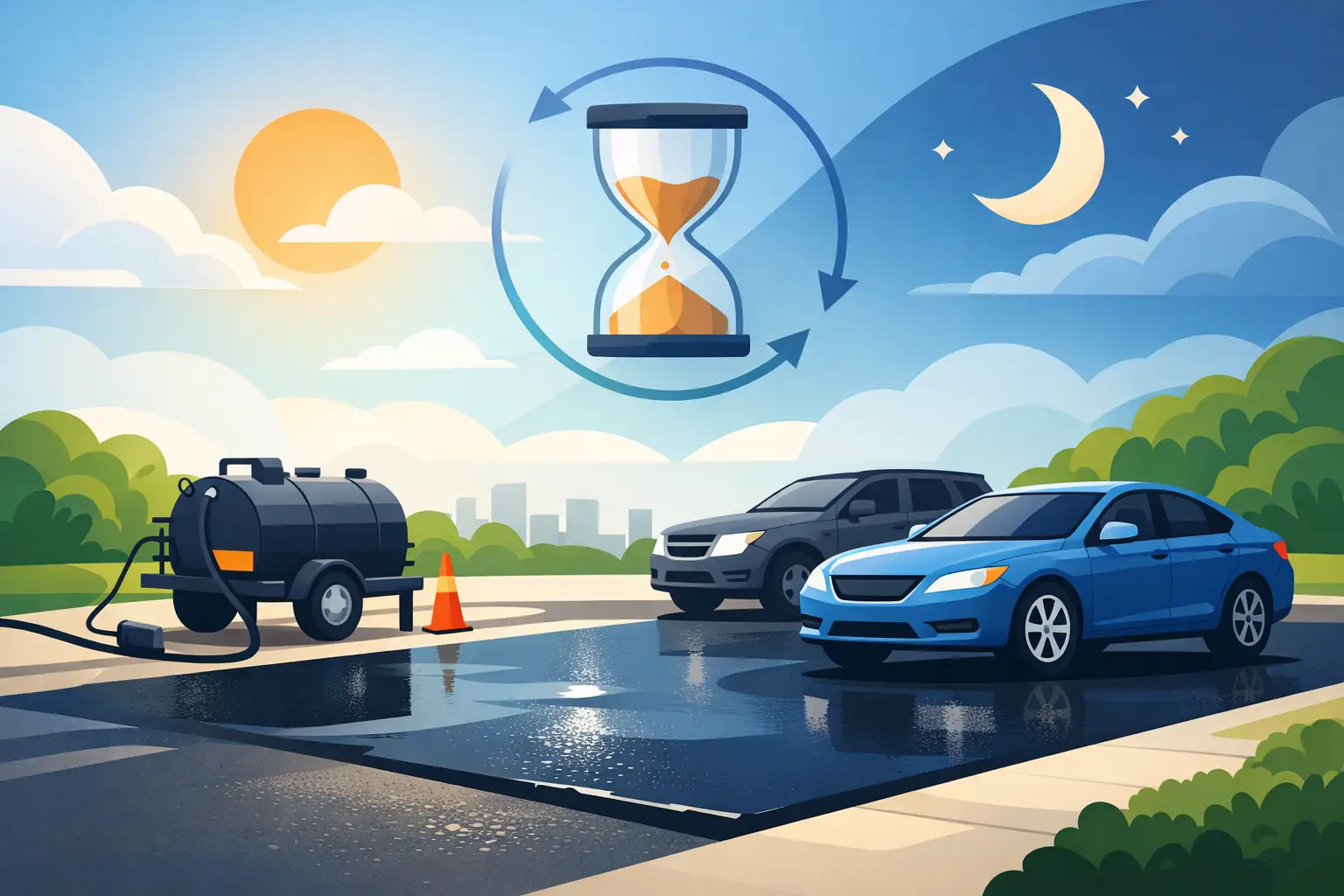
A freshly sealed driveway can look dry long before it is ready for a vehicle. That distinction matters. The right sealcoating cure time for cars protects the new coating from tire marks, scuffs, peeling, and premature wear – and helps ensure the money spent maintaining your asphalt delivers lasting value.
For most residential driveways, waiting at least 24 hours before driving is the usual starting point. In the Hudson Valley, however, temperature, humidity, shade, and recent rain can change that timeline. When conditions are cool or damp, 48 hours is often the smarter choice.
Sealcoating Cure Time for Cars: The Practical Answer
If your driveway was sealed during warm, dry weather, a passenger car can generally return after 24 hours. That does not mean the coating has fully hardened. It means it has typically dried enough to handle normal light vehicle traffic without a high risk of damage.
For the best result, plan for 24 to 48 hours before driving on a newly sealcoated residential driveway. If the surface was applied late in the day, receives little sunlight, or the forecast calls for humidity, morning dew, or cool temperatures, give it the full 48 hours. A little extra patience is far less costly than having to repair a marked or damaged finish.
Commercial lots may require a longer traffic plan, especially where delivery vehicles, work trucks, dumpsters, or frequent turning movements are involved. Cars place less stress on a coating than heavy vehicles, but repeated traffic in the same areas can still affect a coating that has not had enough time to cure.
Dry to the Touch Is Not Fully Cured
Sealcoating dries as water and other components evaporate from the applied material. The surface may no longer feel tacky after several hours, particularly on a sunny summer day. But curing continues beneath the surface. Until the coating firms up, tires can press into it, pull at it during sharp turns, or leave dark marks where rubber contacts the fresh sealer.
This is why a driveway can look ready one afternoon but still be vulnerable that evening. Overnight moisture is especially common in Dutchess County and throughout the Hudson Valley. Dew can slow the process, particularly on shaded driveways or areas bordered by trees.
A professional crew should provide property-specific instructions after the work is completed. Those instructions account for the product used, the condition of the pavement, the application schedule, and the weather on the day of service. Follow them over any general rule of thumb.
What Changes the Cure Time?
Weather is the biggest variable. Sealcoating performs best when applied under suitable conditions, but even a properly scheduled job needs time to settle before cars return. Warm, sunny, low-humidity weather promotes faster drying and curing. Cooler temperatures, cloud cover, humid air, and shade extend the wait.
Rain is another concern. A coating needs a dry window both during application and afterward. Rain falling too soon can dilute, streak, or wash away uncured material. If unexpected weather arrives after sealing, do not assume the surface is ready because it looked dry before the rain. Allow additional time and check with your contractor if you have concerns.
The condition of the pavement also matters. Older asphalt with cracks, repaired areas, or a rough texture may absorb material differently than a smoother surface. Sealcoating is a protective treatment, not a structural repair, so cracks should be addressed before sealing whenever possible. Proper crack repair helps keep water out of the pavement base and supports a more uniform finished surface.
How to Treat a Newly Sealcoated Driveway
Once the recommended waiting period has passed, resume normal use gently. Avoid tight steering turns while the car is stopped, especially during the first few days. Turning the wheel in place can leave scuff marks or twist the coating before it has fully firmed up.
Try not to park in the exact same spot every day during the first week. Moving your parking position slightly helps distribute tire pressure while the coating continues to harden. This is particularly helpful during hot weather, when black asphalt absorbs heat and can remain softer later into the day.
Be mindful of vehicle leaks. Oil, gasoline, brake fluid, and other automotive fluids can stain and weaken asphalt surfaces. Sealcoating provides an added layer of protection, but it is not a permanent shield against spilled petroleum products. Clean leaks promptly and address the source when possible.
Keep lawn equipment, bicycles with kickstands, patio furniture, and sharp-edged items off the new surface until it has had adequate time to cure. A kickstand, narrow chair leg, or dragged trash bin can leave an impression in a coating that is still soft.
When Should You Wait Longer Than 48 Hours?
There are situations where waiting beyond the standard window is the right call. If temperatures are unseasonably cool, humidity stays high, or the driveway remains shaded for most of the day, 72 hours may be appropriate. The same is true if the driveway needs to support a heavier vehicle, such as a loaded pickup, work van, trailer, or delivery truck.
Property owners should also allow more time when the surface feels soft or leaves a mark under gentle pressure. Do not test it with a vehicle. Instead, look for obvious tackiness or consult the contractor who performed the work. A reputable local contractor would rather answer a quick question than see a fresh application damaged by early traffic.
For businesses, it pays to plan sealing around your operating hours. Reserve a section of parking when possible, direct traffic away from newly treated lanes, and schedule deliveries around the curing window. A clear plan reduces inconvenience for customers and protects the finished work from unnecessary traffic.
Common Mistakes That Leave Marks
The most common problem is driving on the surface too early. The second is treating a newly sealcoated driveway as if it has already been in service for months. Even after cars are permitted back on it, the coating benefits from gentle use while it completes its cure.
Avoid sharp turns, hard braking, and parking heavy equipment in one location. Do not drag garbage cans across the surface or let a vehicle sit with extremely hot tires immediately after a long highway drive. These situations do not always cause damage, but they increase the chance of scuffs and impressions when the coating is fresh.
Tire marks are often cosmetic and may fade as the sealcoat continues to cure, but deep marks, peeling, or displaced coating should be reported promptly. Taking photos and contacting the contractor early makes it easier to determine whether the issue is normal settling, weather-related, or needs attention.
Protecting Your Asphalt Beyond the First Two Days
A good sealcoating job is part of an ongoing maintenance plan. It refreshes the appearance of faded pavement and helps shield asphalt from sunlight, water, salt, and everyday vehicle wear. It cannot correct a failing base or large structural cracks, which is why timely repairs matter.
Watch for new cracks, pooling water, crumbling edges, and areas where the surface begins to ravel. Addressing these issues early can help prevent water from reaching the base beneath the asphalt, where damage becomes more expensive to repair. Regular cleaning also matters: remove debris, avoid harsh chemicals, and keep drainage paths clear.
At Exodus Proseal, the goal is not simply to leave a driveway looking darker for a season. It is to help Hudson Valley property owners protect an important part of their property with practical maintenance, careful application, and dependable guidance after the crew leaves.
If your newly sealed driveway is dry but you are unsure whether it is ready for cars, waiting one more day is usually the safest decision. A clean, properly cured surface is worth the short inconvenience.
Leave a Reply